Spacewalk Risk Alert
Mason O'Donnell
| 21-04-2026
 · Science Team
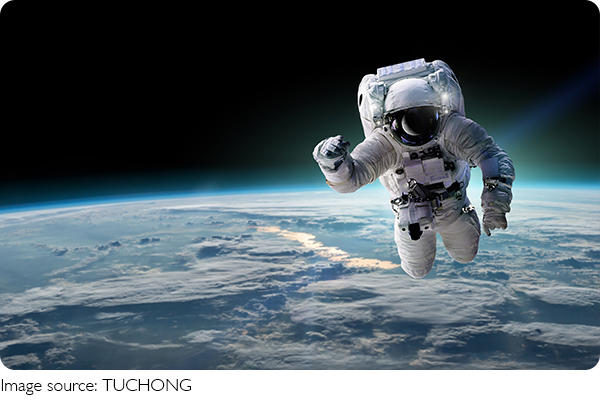
Spacewalks are one of the most fascinating yet high-risk activities humans perform beyond Earth. From the outside, it may look like a calm floating experience, almost like a slow dance above the planet. But in reality, every moment outside a spacecraft is controlled, intense, and full of risks.
Astronauts do not simply float freely for enjoyment. They work in an environment where survival depends entirely on equipment, training, and constant attention.
Spacewalk Reality
A spacewalk happens outside a spacecraft where there is no natural air and no normal pressure. This environment is completely silent and extremely harsh for the human body.
Even simple actions become difficult. Moving forward, turning around, or grabbing a handle requires slow and careful planning. Nothing is automatic. Every movement must be controlled.
What looks peaceful from the inside is actually a highly demanding task that requires full focus from start to finish.
Early Lessons
In the early stages of space exploration, spacewalks revealed unexpected challenges. Some astronauts experienced suit expansion in the vacuum environment, making it difficult to return through narrow openings.
On one mission, after completing work outside, an astronaut found that the spacecraft hatch was difficult to secure again. The situation required intense physical effort and calm thinking under pressure, since any delay could increase the risk level.
These early missions taught an important lesson: even small technical problems can become serious outside Earth.
Suit Dependence
During a spacewalk, the suit is the only protection system. It provides oxygen, maintains pressure, and controls temperature.
Without it, the human body cannot survive in space conditions. Because of this, astronauts constantly check suit data such as pressure and oxygen levels while working.
The suit is like a personal life-support system. If it fails, the situation becomes critical very quickly. That is why every suit is built with multiple safety layers and backup functions.
Water Leak Hazard
One of the most dangerous problems that can happen during a spacewalk is water entering the helmet. In some real cases, a cooling system inside the suit malfunctioned, causing water to flow into the helmet area.
Because there is no gravity pulling liquids down, the water stayed inside the helmet. It slowly spread and began covering the face area, making it harder to see and breathe.
Communication also became unclear. The astronaut had to stop the task immediately and return to safety without delay.
In another similar event, a repeated leak problem forced a spacewalk to end early again. These incidents show how quickly conditions can change in space.
Movement Control
To prevent drifting away, astronauts use safety tethers connected to the spacecraft. These lines are essential for controlled movement.
Each step outside is planned carefully. Astronauts move slowly, often shifting one handhold at a time. Before moving forward, they always secure their position first.
There have been ideas in the past about free-floating movement systems using small air bursts for propulsion. However, these systems were considered too risky because drifting too far could make return impossible.
Today, safety lines remain the most reliable method for controlling movement outside the spacecraft.
Space Debris Threat
Another major risk comes from tiny particles moving through space at extremely high speeds. These particles can be natural dust or fragments from old objects.
Even though many of them are extremely small, their speed gives them strong impact power. A tiny particle traveling fast can still cause serious damage.
Space suits are built with multiple protective layers to reduce this risk. These layers absorb and spread out impact energy.
However, no protection system is perfect. This is why astronauts always remain alert while working outside.
Emergency Return
Astronauts train regularly for emergency return procedures. If something goes wrong during a spacewalk, they must go back to the airlock as quickly and safely as possible.
Training includes practicing movement along the spacecraft structure, checking equipment under pressure, and following strict return steps.
Even in stressful situations, astronauts must stay calm and move carefully. Speed is important, but safety is always the priority.
These exercises prepare them for situations where every second matters.
Final Reflection
Spacewalks may look beautiful from Earth, but they are among the most demanding tasks in human exploration. Outside the spacecraft, astronauts face challenges such as suit malfunctions, liquid leaks, floating hazards, and high-speed particles.
Every step outside is a combination of courage, preparation, and discipline. Nothing is left to chance.
For us watching from below, it is easy to admire the view. But behind every spacewalk is careful planning and constant risk management.
Thank you for exploring this topic with us, Lykkers. Space continues to inspire curiosity, but it also reminds us how challenging the universe can be beyond our home.
NASA Releases Spacewalk Footage From Astronauts Outside International Space Station
Video by Forbes Breaking News