Satellites

Pardeep Singh
| 23-04-2026
 · Science Team
Satellites—those mysterious objects whizzing around Earth—are often viewed as just tools for communication, weather tracking, and navigation.
But have you ever stopped to think about how truly incredible they are?
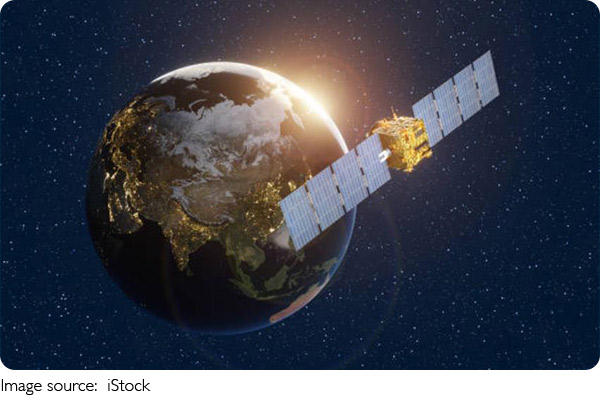
From their role in space exploration to their ability to shape modern life, satellites are more than just orbiting machines; they are marvels of human innovation. Let's dive into some fascinating facts about satellites that will change the way you view these cosmic creations.
1. There Are Over 3,000 Satellites in Space
As of recent estimates, more than 3,000 satellites orbit Earth, and this number is steadily growing. These satellites serve various purposes, from scientific research and telecommunications to navigation and national security. The United States alone has launched hundreds of satellites for both public and private uses.
Interestingly, these satellites come in all shapes and sizes, with some weighing only a few kilograms, while others can tip the scales at several tons. With advancements in miniaturization, the number of small satellites, or "smallsats," has skyrocketed in recent years. These compact satellites are launching in constellations to improve global communications and provide internet access to remote areas.
2. Satellites Can Be Seen With the Eyes
Did you know that you can see some satellites with just your eyes? In fact, many of them are visible at certain times, especially after sunset or just before sunrise when they catch the sunlight. The International Space Station (ISS) is one of the easiest to spot. It appears as a fast-moving bright light across the sky, and on clear nights, it can be seen without a telescope.
But the ISS isn't the only satellite visible to stargazers. Thousands of satellites reflect sunlight, making them visible to the eyes from Earth. Some websites and apps can even help you track satellite passes, so you can catch a glimpse of them when they fly overhead.
3. The First Satellite Was Launched in 1957
The very first artificial satellite, Sputnik 1, was launched by the former space-faring nation in 1957. It was a spherical metal ball with four long antennas. Though it was only 23 inches in diameter and weighed around 183 pounds, it marked a turning point in space exploration. Its launch set off the "Space Race" between the United States and the other nation, ultimately leading to the advancements in satellite technology that we rely on today.
Since then, satellites have evolved enormously in both size and capability, helping scientists, governments, and private entities access data from space for a wide array of purposes.
4. Satellites Help Predict the Weather
One of the most significant ways satellites benefit us is in weather forecasting. Weather satellites orbit Earth, collecting data about cloud patterns, temperature, humidity, and air pressure. This data helps meteorologists predict weather conditions, track storms, and issue warnings for natural disasters such as hurricanes and tornadoes.
Satellites also provide valuable information for climate research. They monitor global warming trends, ocean temperatures, and changes in ice caps and glaciers, helping scientists better understand the Earth's changing climate.
5. GPS Relies on Satellites
If you've ever used a GPS to find your way, you've experienced satellite technology firsthand. The Global Positioning System (GPS) relies on a network of at least 24 satellites orbiting the Earth. These satellites continuously send signals to receivers on the ground, allowing them to pinpoint your exact location within meters.
Interestingly, the accuracy of GPS has improved over the years, with new systems offering greater precision. It's not just for cars—GPS is used in everything from aviation to agriculture and even tracking wildlife.
6. Satellites Can "See" Through Clouds
Satellites have a unique ability to "see" through clouds and even in darkness, thanks to the technology they carry. Instruments like radar and infrared sensors allow satellites to gather data even when cloud cover or nighttime conditions would hinder normal observation. This ability is especially useful for monitoring remote regions, natural disasters, and areas that are difficult to reach by ground teams.
For instance, radar-equipped satellites can map terrain, detect changes in land surface, or track deforestation. Infrared sensors can identify temperature variations, helping with environmental studies, and even locating oil spills on oceans.
7. Satellites Are Used for Space Exploration
Satellites aren't just confined to Earth's orbit. They are also instrumental in space exploration. Probes sent to distant planets, moons, and asteroids often rely on satellite technology to send information back to Earth. For example, the Hubble Space Telescope is technically a satellite, and it has given us breathtaking images of galaxies, nebulae, and other cosmic phenomena that wouldn't be possible to capture from Earth.
Additionally, satellites are used to observe the moon and other celestial bodies, providing essential data that helps scientists understand the universe and explore space further.
8. Satellites Have a Limited Lifespan
Though satellites are designed to last for many years, they do have a limited lifespan. Most satellites orbit Earth for 10 to 15 years before their components begin to degrade, whether from exposure to solar radiation, wear and tear, or fuel depletion. Once they reach the end of their life, satellites are either decommissioned or left in a "graveyard" orbit, where they will no longer interfere with operational satellites.
Interestingly, space debris management is becoming a growing concern. As more satellites are launched into orbit, there's an increased risk of collisions and the creation of even more debris. Companies and agencies are working on ways to deal with this issue, including developing technologies to clean up space and remove old satellites.
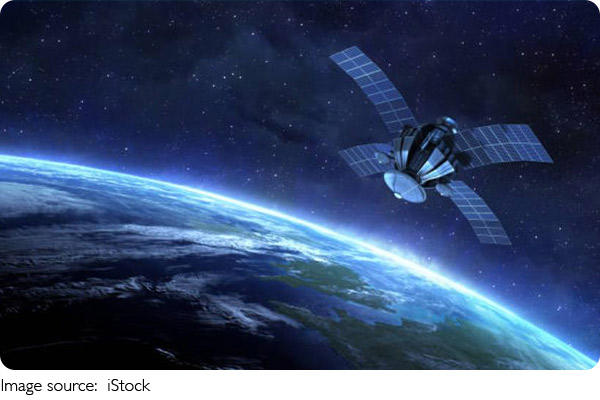
Conclusion: The Silent Giants Above Us
Satellites play a crucial role in our daily lives, whether we realize it or not. From weather forecasting and GPS navigation to space exploration, these orbiting marvels help connect the world, provide critical data, and advance our knowledge of the universe. As technology continues to improve, satellites will only become more integral to life on Earth—and beyond. Next time you look up at the sky, remember that these incredible machines are silently working above us, shaping the future of our world and space exploration.