Astronaut's Experience

Mukesh Kumar
| 23-04-2026
 · Science Team
Imagine being strapped into a tightly secured seat, surrounded by blinking lights, metal walls, and the faint hum of advanced technology.
You're about to embark on one of the most thrilling and intense human experiences—launching into space.
From an astronaut's perspective, the rocket launch isn't just a physical journey through the atmosphere; it's a mix of emotions, sensations, and sheer wonder. But what does it actually feel like inside the capsule as the rocket roars to life and begins its ascent?
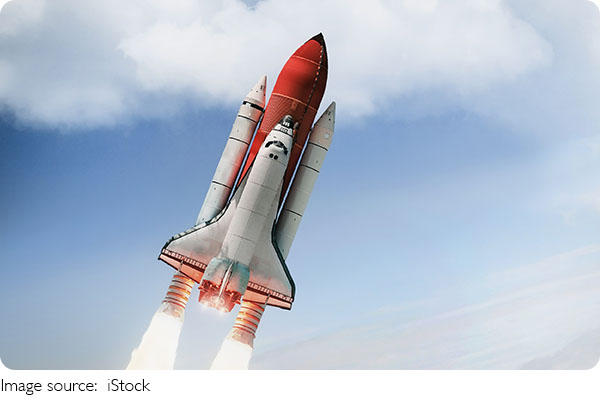
Let's explore this unique, exhilarating experience from the eyes of those who have been there.
1. The Build-Up: Anticipation and Nerves
The countdown has begun. For astronauts, the moments leading up to launch are filled with anticipation and an understandable sense of nerves. There's a hum of excitement in the air, but also a quiet sense of focus. Astronauts are mentally preparing for the massive forces and the sheer power of the rocket that will soon propel them into space. The moment the countdown hits zero, a new kind of energy takes over.
Inside the capsule, everything seems to come to a standstill, though the external world is anything but calm. The rocket is poised to launch, and astronauts know that in just moments, they will be subjected to forces unlike anything they've ever felt before.
2. The First Moments: Ignition and Lift-Off
As the engines ignite, there's a sudden jolt, a deep rumble that travels through the entire body. The powerful force of the rocket's engines creates an overwhelming sensation of force that pushes astronauts deep into their seats. The G-forces start to build rapidly, and the feeling is often described as heavy—almost as though a great weight is pressing down on the chest and body.
The initial noise is deafening, a roar that can be felt as much as heard. The astronauts inside the capsule can't hear much over the sound of the engines, but they feel every vibration and every bit of force pushing them upwards. The sensation of acceleration is intense—your body feels as though it's being held firmly in place, yet at the same time, the capsule is rapidly climbing, pushing through the Earth's atmosphere at breakneck speed.
3. The Feeling of Weightlessness: A Brief Escape
As the rocket continues its ascent, astronauts are soon lifted above the densest layers of the atmosphere. At around 100 kilometers in altitude, they reach the edge of space. At this point, the forces pressing them into their seats begin to lessen. The acceleration slows, and there's a brief moment when weightlessness begins to set in.
The shift from being pressed into the seat to experiencing a sensation of floating is both surprising and surreal. It's like nothing else—a moment of near silence inside the capsule, aside from the soft hissing of air conditioning and the faint sound of instruments. For the astronauts, this transition from intense pressure to a lack of weight can be disorienting at first, but also exhilarating. It's a reminder that they are on their way to a destination beyond Earth's gravity.
4. The View: A New Perspective on Earth
As the rocket continues its journey higher, the view outside the capsule starts to change dramatically. The blue of the sky starts to darken, and soon, the curvature of the Earth becomes visible. For many astronauts, this is one of the most awe-inspiring moments of the entire mission. The sight of Earth from space is often described as humbling and beautiful. The vastness of space, the thin atmosphere, and the peaceful view of Earth below all serve to put the astronaut's entire journey into perspective.
Inside the capsule, the astronauts are still securely harnessed into their seats, but they can turn their heads to catch glimpses of the Earth through the windows. The sight of the planet from this height is breathtaking—vibrant, fragile, and alive with energy. It's a view that few people on Earth will ever experience firsthand, and it is often a moment of reflection for astronauts.
5. The Final Stage: Reaching Orbit
After reaching the edge of space, the rocket continues its trajectory towards orbit. The transition from powered flight to orbiting is smooth but still thrilling. The astronauts begin to feel more stable as they enter free fall, but the rocket has now reached a velocity that allows it to remain in orbit around the Earth. The sensation of weightlessness becomes more pronounced as they stop accelerating upwards and begin to circle the planet.
At this stage, everything inside the capsule becomes more relaxed. Astronauts can unbuckle their seatbelts and float freely inside the spacecraft, adjusting to the microgravity environment. There is a sense of calm after the initial chaos of lift-off, but the excitement of being in space remains. The shift from a vertical ascent to a horizontal orbit is an essential part of the journey, and astronauts often experience a renewed sense of wonder as they adjust to the environment.
6. Coping with the G-Forces
One of the greatest challenges during launch is managing the G-forces—the forces of gravity that push down on the body as the rocket accelerates. The G-forces during launch can reach up to 3-4 Gs, meaning the astronauts feel three to four times their normal body weight pushing against them. For many astronauts, this is one of the most physically demanding parts of the launch, though the discomfort is temporary.
To cope with these forces, astronauts are trained to tense their leg muscles and keep their breathing steady. Many astronauts report that focusing on their breath and staying calm helps them endure the intense pressure. It's not just a physical challenge; there's a mental element as well, with astronauts needing to stay alert and focused during this demanding phase of the flight.
7. The Aftermath: A New Reality in Space
Once the rocket has completed its ascent and the astronauts are in orbit, the emotions shift. The noise and vibrations of the rocket's engines fade into the background, and a sense of tranquility begins to settle in. The astronauts are no longer under intense pressure, but they are now in an entirely new environment—space. The excitement of launch gives way to the realization that they are now part of something much larger: humanity's continued exploration of the cosmos.
Conclusion: An Experience Like No Other
From the intense physical forces of launch to the breathtaking beauty of Earth from space, the experience of lifting off in a crewed rocket is truly unique. The journey is one of contrasts—power and stillness, pressure and freedom. For astronauts, it's a profound reminder of the fragility of our planet and the resilience of the human spirit. Though the ascent itself lasts only minutes, the memories of that launch, and the view from space, last a lifetime.